
Welcome to the new issue of Grow Your Knowledge Newsletter where you get free, ready to use, actionable, clear information regarding FIDIC Contracts and Construction Claims.
Today at a Glance;
➤ Term of the Week
➤ One Tweet
➤ Avoid Claims by a Well-Structured Measurement and Valuation Process
TERM of the WEEK 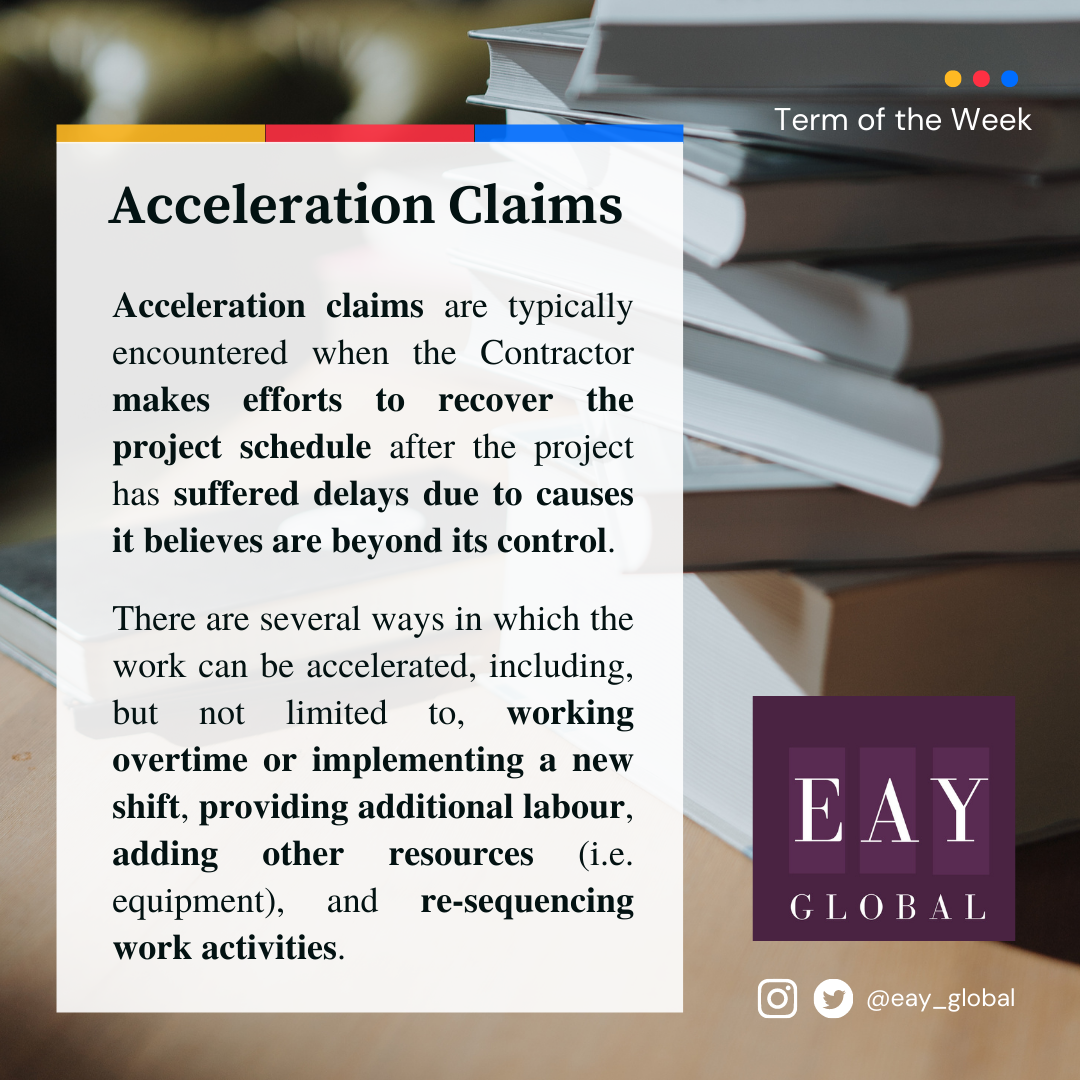
ONE TWEET 
Inaccurate measurement and valuation are the common causes of claims.
Not properly;
➤ Interpreting, and,
➤ Applying
the measurement and variation rules results with claims.
You can avoid these types of claims by implementing a well-structured measurement and valuation process.
However, structuring these processes properly is challenging.
You generally struggle with 1 of 3 challenges;
➤ You cannot determine which METHOD of MEASUREMENT you should use
➤ You cannot determine how to select the APPROPRIATE RISK or PRICE
➤ You cannot determine what is the right process to EVALUATE the WORKS
1999 FIDIC Red Book covers both measurement and valuation processes;
➤ clearly, and,
➤ in detail
In today’s newsletter, we broke these processes down into 5 steps.
Step #1: Notice to the Contractor’s Representative
Step #2: Measurement of Works
Step #3: Agreement or Determination of the Measurement Records
Step #4: Selecting the Appropriate Rate or Price
Step #5: Evaluation of the Works
Do not forget.
Every claim has unique needs.
Build your own claim preparation system.
Formulate the effective claim and present it in a professional way.
Steps of Measurement
and Evaluation
Procedure
1 Notice to the Contractor’s Representative
The Engineer is to give a Notice to the Contractor’s Representative for the measurement of the works.
2 Measurement Procedure
2 Measurement Procedure
The details to be considered are [1];
(a) Measurement shall be made of the net actual quantity of each item of the Permanent Works, and,
(b) The method of measurement shall be in accordance with the Bill of Quantities or other applicable schedules.
Measurement Process
1. While realizing the measurement, the Contractor’s Representative is to;
➤ Attend or send a qualified representative to assist the Engineer.
➤ Provide the particulars that are required by the Engineer.
2. If the Contractor fails to attend or send a representative, the measurement made is to be accepted as accurate.
Measurement from Records
Permanent Works are to be measured from records except as otherwise stated in the Contract. And, these records are to be prepared by the Engineer.
1. The Contractor is to attend to examine and agree the records with the Engineer, and shall sign the same when agreed.
2. If the Contractor fails to attend, the records are to be accepted as accurate.
3 Agreement or Determination of the Measurement
3 Agreement or Determination of the Measurement
If the Contractor examines the measurement records but does not agree with the Engineer regarding the measurement.
1. The Contractor is to give a Notice to the Engineer in relation to the records’ being inaccurate.
➤ If the Contractor fails to give a Notice to the Engineer within 14 days after being requested to examine the records, the records are to be accepted as accurate.
2. After receiving a Contractor’s Notice;
➤ The Engineer is to review the records and either confirm or vary them.
4 Selecting the Appropriate Rate or Price
4 Selecting the Appropriate Rate or Price
The appropriate rate or price for each item is to be specified in the Contract or specified for similar work (if there is no such an item).
A new rate or price is to be appropriate for an item of work if [2]:
(a)/(i) The measured quantity of the item is changed by more than 10% from the quantity of this item in the Bill of Quantities or other Schedule.
(ii) This change in quantity multiplied by such specified rate for this item exceeds 0.01% of the Accepted Contract Amount.
(iii) This change in quantity directly changes the Cost per unit quantity of this item by more than 1%, and
(iv) This item is not specified in the Contract as a “fixed rate item”:
or
(b)/(i) The work is instructed under Clause 13 [Variations and Adjustments].
(ii) No rate or price is specified in the Contract for this item, and
(iii) No specified rate or price is appropriate because the item of work is not of similar character, or is not executed under similar conditions, as any item in the Contract.
Each new rate or price is to be produced from any relevant rates or prices that are specified in the Contract with fair adjustments in accordance with the above mentioned paragraphs.
Otherwise, it is to be derived from the reasonable cost of executing the work and profit, assessing any other relevant matters.
5 Evaluation of the Works
5 Evaluation of the Works
By evaluating each item of the work, the Engineer is to proceed in accordance with Sub-Clause 3.5 [Determinations] to agree or determine the Contract Price applying;
1. The measurement agreed or determined in accordance with Sub-Clause 12.1 [Works to be Measured] and 12.2 [Methods of Measurement].
2. The appropriate rate or price for the item.
FOOTNOTES
1. The same Sub-Paragraph letters are used as in Sub-Clause 12.2 [Method of Measurement] of the 1999 FIDIC Red Book.
2. The same Sub-Paragraph letters are used as in Sub-Clause 12.3 [Evaluation] of the 1999 FIDIC Red Book.
This information is provided for your convenience and does not constitute any “Legal Advice”. This document is prepared for the general information of the interested persons. This should not be acted upon in any specific situation without appropriate legal advice.
This information may not be reproduced or translated without the prior written permission of eayglobal.com
For further information please contact eay@eayglobal.com

![Delay Claims Preparation [Checkpoints]](https://eayglobal.com/wp-content/uploads/2024/05/1-150x150.jpg?crop=1)