
Welcome to the new issue of Grow Your Knowledge Newsletter where you get free, ready to use, actionable, clear information regarding FIDIC Contracts and Construction Claims.
Today at a Glance;
➤ Term of the Week
➤ One Tweet
➤ Why you need Third-Party Funding?
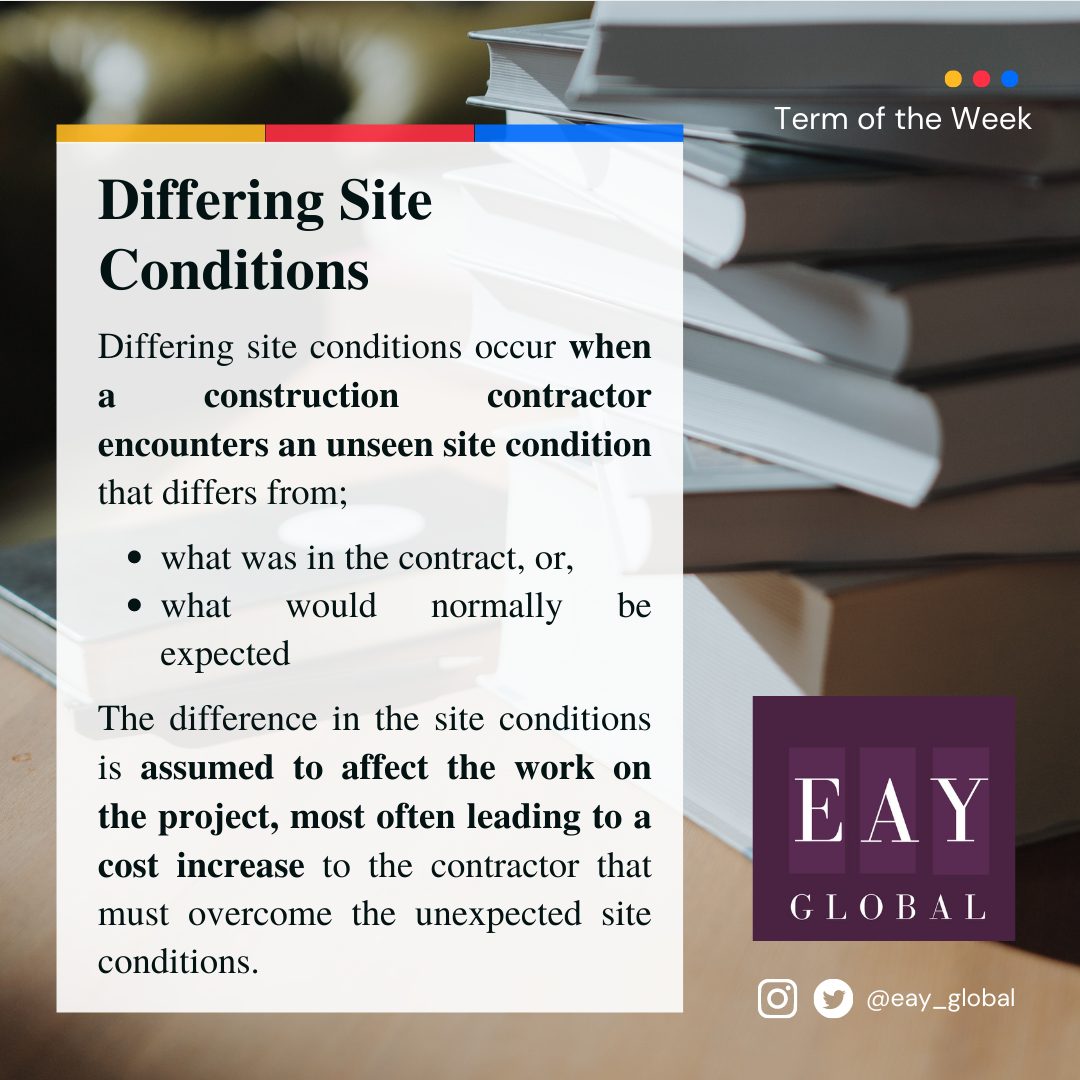
TERM of the WEEK
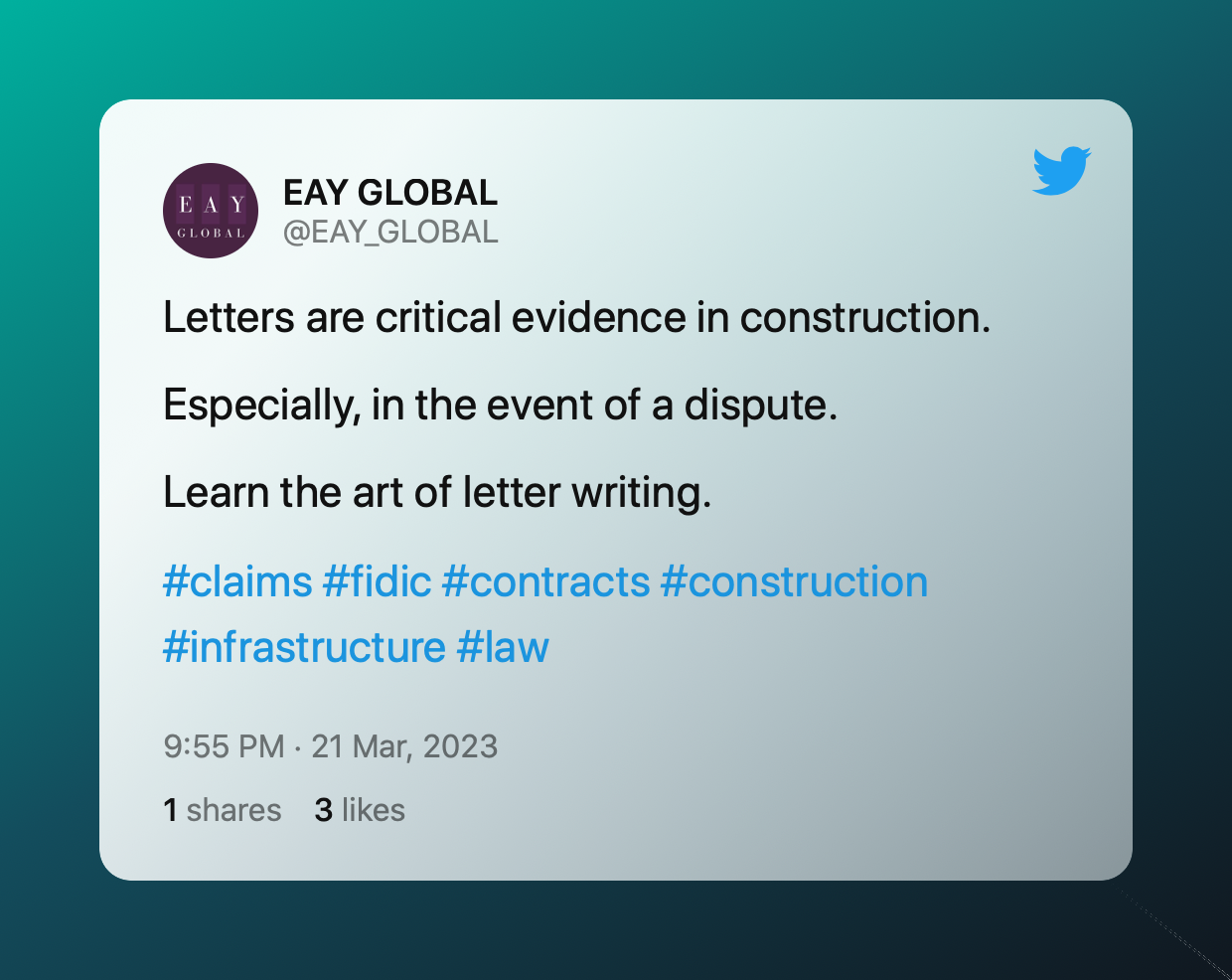
ONE TWEET
Happy Thursday.
*
Mostly, bringing your disputes to arbitration is costly for you.
Expenses such as;
➤ Legal fees
➤ Other associated costs
not only;
➤ Make the process expensive, but also,
➤ Negatively impact your liquidity
*
However, in some cases, arbitration becomes highly essential.
*
Not bringing claims to arbitration leads to;
➤ Accepting your losses
➤ Negotiating unfavourable settlements
➤ Increasing the ongoing impacts of the dispute
*
All of those shows that you should incur the financial burden of arbitration, or…
Or, there is another option.
”Third-Party Funding”.
A valuable tool that provides finance for your arbitration costs.
But, how will you access Third-Party Funding and how will you manage this process?
*
Considering that the nature, structure and features of the third-party funding process vary from case to case;
➤ In today’s newsletter, we detailed the steps of accessing third-party funding
Here’s what we covered.
Step #1: Evaluating the Potential Funders
Step #2: Initial Review by the Funder
Step #3: Signing Non-Disclosure Agreement
Step #4: Preparation for the Due-Diligence Phase
Step #5: Approval of the Funding
Step #6: Negotiating the Funding Agreement
Step #7: Disclosure of Funding Agreement
Step #8: Progress Reports to the Funder
*
Be aware of the potential of Third-Party Funding.
And, monetize your claims.
*
Let’s elaborate more.
*
1 Evaluating the Potential Funders
While choosing a “Funder”, it is important to ensure that the Funder has;
if the Contractor suffers delay and/or incurs cost due to;
1.1 Financial Capability
The Funder should have sufficient Capital to meet all the liabilities that may arise. |
1.2 Reputation
The Funder should add value to the process by providing legal and technical advice. |
2 Initial Review by the Funder
The Claimant or the Claimant’s Lawyer or an intermediary comes together with the Funder and asses;
The Size of the Expected Funding. |
The Size of the Potential Recovery. |
to determine whether the matter meets the Funder’s basic parameters.
3 Signing Non-Disclosure Agreement
Funding process will include sharing confidential information with the Funder.
It is important to enter into a Non-Disclosure Agreement at the early stages of the process.
4 Preparation for the Due-Diligence Phase
Once initial commercial terms have been agreed upon, the due-diligence process begins. The Funder’s in-depth review is essential.
4.1 Merits of the Claim
Case analysis is conducted by in-house experts of external counsels to evaluate the strength and weakness of the claims. |
4.2 Detailed Budget
Detailed costs regarding Lawyers’, Experts’, Artbirtrators’ fees and administrative fees. |
Timeline setting out the anticipated process. |
4.3 Respondent’s Financial Capability
Respondent’s Payment History. |
Location of the Respondent’s Assets. |
Enforcement Strategies if the awarded amount is not paid |
5 Approval of the Funding
If the funder is satisfied that the case meets the criteria, the Funder will recommend the case to the Investment Committee.
6 Negotiating the Funding Agreement
General Terms
General Terms should be clear and reflect the intentions of the parties. |
Rate and Structure of the Return
Fixed percentage share of any damages recovered, or, |
A multiple of the funding to be provided, or, |
Combination of both. |
The Amount of the Funding
The Amount of Funding to be provided. |
The Scope of the Funding
Lawyer’s Fees and Expenses |
Expenses related to the Expert and Witness Evidence |
Arbitrator’s Fees |
The cost of the Arbitral Institution |
Distribution Provisions
How and when the proceeds of the recovery are to be distributed among the Parties. |
Dispute Resolution Process
Fair, independent and transparent dispute resolution process. |
Termination of Agreement or Withdrawal
Whether either or both parties can terminate the agreement. |
The impacts of that termination. |
7 Disclosure of the Funding Agreement
Some Institutions began to address issue of mandatory disclosure such as;
ICC
The new ICC Rules of Arbitration (New Rules) came into effect on 1 January 2021. Article 11(7) of the 2021 Rules requires parties to “promptly” disclose the identity of any third-party funders involved in the proceeding. |
Swiss International Arbitration Center (SIAC)
Rule 24(l) of the SIAC Investment Arbitration Rules gives the Tribunal the power to order the disclosure of the existence of the third-party funding arrangement. |
Hong Kong International Arbitration Center (HKIAC)
HKIAC Rules recognise third-party funders and in particular, require a funded party to disclose promptly the existence of a funding agreement. |
8 Progress Reports to the Funder
Most funders require reporting from the Funded Party;
On a quarterly basis, or, |
At key stages of the arbitration. |
See you next week.
This information is provided for your convenience and does not constitute any “Legal Advice”. This document is prepared for the general information of the interested persons. This should not be acted upon in any specific situation without appropriate legal advice.
This information may not be reproduced or translated without the prior written permission of eayglobal.com
For further information please contact eay@eayglobal.com

![Delay Claims Preparation [Checkpoints]](https://eayglobal.com/wp-content/uploads/2024/05/1-150x150.jpg?crop=1)